Marcite Pool Resurfacing Orlando FL: Budget-Friendly Options for Pool Renovation
A worn pool surface changes the way a backyard feels. Water may still be clear, the equipment may still run, and the tile line may still look presentable from a distance, yet the moment swimmers step onto a rough, stained, or flaking finish, the problem becomes obvious. In Central Florida, that decline often happens faster than homeowners expect. Long summers, heavy rain, high UV exposure, fluctuating water chemistry, and near year-round use put steady pressure on plaster and aggregate finishes.
For many homeowners searching for pool resurfacing Orlando FL services, the question is not whether the pool needs work. The real question is how to restore it without overspending. That is where marcite still enters the conversation. Despite the rise of premium finishes, marcite remains one of the most practical ways to give an older pool a clean, serviceable new interior at a reasonable cost.
The right decision depends on more than the initial estimate. It depends on the age of the shell, the pool’s current condition, how long the owner plans to stay in the home, and whether appearance, longevity, or budget ranks highest. A smart renovation balances all three.
Why Orlando pools need resurfacing sooner than many owners expect
Pool interiors are not permanent. Even a well-built shell with reliable circulation eventually shows wear at the finish layer. Plaster erodes gradually. The surface loses smoothness. Discoloration spreads. Hairline checking may appear. In more advanced cases, owners start seeing spalling, delamination, or persistent staining that no amount of brushing will remove.
In Orlando, these issues often surface after years of intense exposure. Pools here are not opened for a short northern season and then closed for the winter. They are active almost all year. That means more swimmer traffic, more chemical adjustments, and more evaporation and refill cycles. Each factor leaves a mark.
A homeowner looking up pool resurfacing near me is usually noticing one or more practical problems, not just cosmetic ones. Swimmers may complain that the bottom feels abrasive on their feet. The pool may become harder to keep balanced because an older finish is more porous. Stains can become deeply embedded. Tiny plaster flakes may collect near returns or on steps. When that happens, the pool is no longer simply “old looking.” It is beginning to signal that the finish has reached the end of its useful life.
What marcite actually is, and why it remains relevant
Marcite is a traditional white plaster finish made from a cement-based mix with marble dust or similar aggregate. It has been used in residential pools for decades because it creates a classic, bright appearance and costs less upfront than most upgraded finishes.
When people ask about marcite pool resurfacing Orlando options, they are usually considering a simple but meaningful reset. Marcite does not try to imitate a luxury resort texture. It is not designed to be the longest-lasting finish on the market. Its appeal is straightforward: it is accessible, clean-looking, and effective when installed correctly over a properly prepared shell.
That last point matters. Marcite gets blamed for failures that often stem from poor prep work, rushed curing, weak water startup practices, or underlying shell issues. A good plaster crew can produce a finish that looks crisp and performs respectably for years. A careless crew can leave behind streaking, trowel marks, rough spots, and premature wear.
In practical terms, marcite is often the budget baseline against which other finishes are compared. If a homeowner receives quotes for pool plastering Orlando projects, marcite is usually the lower-cost entry point. Quartz, exposed pebble, and polished aggregate finishes build upward from there.
When budget-friendly does and does not mean cheap
There is a difference between economical and cheap. Economical work solves the right problem with disciplined spending. Cheap work ignores the condition of the shell, cuts prep time, waters down scope, and leaves the owner paying again in a few years.
A budget-conscious resurfacing project can still be done well. In fact, some of the most sensible Orlando renovations are not elaborate at all. They focus on structural soundness, reliable waterproofing, proper bond coat application where required, a clean plaster finish, and a startup process that protects the new surface.
Where owners get into trouble is chasing the lowest number without clarifying what is included. One proposal may cover chipping out hollow areas, sealing cracks, replacing failed fittings, and managing the startup. Another may quote only the plaster layer itself. On paper, the second number looks attractive. In practice, it can leave the pool with the same hidden defects under a fresh coat.
That is why price alone tells very little in pool resurfacing Orlando. Scope defines value.
Common signs that point to resurfacing rather than simple repair
A few isolated blemishes can sometimes be spot repaired, though patching tends to stand out visually and often ages differently than the surrounding finish. Once wear becomes widespread, patchwork usually stops making financial sense.
The most common indicators are easy to recognize:
- The surface feels rough or abrasive across broad areas.
- Stains remain after professional cleaning and chemical treatment.
- Plaster is flaking, pitting, or separating in multiple spots.
- The pool loses its uniform color and shows pronounced mottling or etching.
- Previous patch repairs are failing or visually distracting.
When two or three of these conditions appear at once, full resurfacing is usually the better long-term choice. At that stage, the owner is not just trying to improve appearance. The goal is to restore a stable interior finish before more extensive damage develops.
The case for marcite in an Orlando renovation
Marcite earns its place because not every homeowner needs a premium aggregate finish. If the goal is to refresh a family pool, prepare a home for sale, or restore functionality without turning the project into a major capital upgrade, marcite can be the right answer.
Its main strengths are cost control and visual simplicity. A fresh white plaster finish brightens the water color, makes the pool look cleaner, and gives the entire yard a more maintained appearance. That matters more than many owners expect. A pool is usually the focal point of the backyard. When the finish is tired, the whole outdoor space feels older.
Marcite also fits well in renovations where the rest of the pool remains in decent shape. If the tile, coping, deck, and equipment are serviceable, there may be little reason to spend aggressively on the interior finish. In those situations, pool replastering Orlando homeowners choose often comes down to one practical idea: restore the pool’s function, improve its appearance, and avoid overbuilding for the neighborhood.
There is also a timing factor. Some homeowners know they will eventually redesign the deck, add automation, retile the waterline, or change the poolscape entirely. Spending on a modest resurfacing now can buy several useful years before a larger renovation.
Where marcite falls short
Marcite is not magic, and homeowners should understand its limits before signing a contract. It generally has a shorter service life than upgraded finishes such as quartz blends or pebble systems. Actual longevity varies based on chemistry, bather load, sunlight, and maintenance discipline, but traditional plaster usually wears faster under harsh conditions than denser, premium alternatives.
It is also more sensitive to startup and ongoing water balance. Poor calcium, pH, or alkalinity management can shorten its life considerably. Orlando owners with inconsistent maintenance routines sometimes do better, financially speaking, with a finish that offers greater durability even if the initial cost is higher.
Aesthetic expectations matter too. Marcite gives a smooth, classic appearance, but it will not provide the depth, texture, or visual variation associated with pebble or polished finishes. If the homeowner wants a luxury look, white plaster may feel too plain no matter how new it is.
Comparing marcite to quartz, pebble, and polished aggregate
For owners exploring pool resurfacing Orlando FL options, the conversation usually expands beyond marcite once bids come in. Quartz and pebble finishes have become popular because they stretch lifespan and offer more design flexibility. A quartz pool finish Orlando contractors install often lands in the middle ground. It costs more than marcite, but less than many premium pebble systems, while providing better stain and etch resistance than standard plaster.
Pebble finishes, including brands homeowners often search under phrases like pebble tec pool finish Orlando or pebble tec pool resurfacing, are valued for durability and natural texture. They typically outlast traditional plaster and hold up well in demanding environments. The trade-off is cost, and for some swimmers, a more textured feel underfoot.
Polished aggregate sits in another category. It aims to combine strength with a more refined, smoother feel than exposed pebble alone. The keyword phrase polished aggregate pool finishb appears in some search terms, likely as a typo, but the finish type itself is real and worth mentioning. It is usually a premium option, chosen by homeowners who want both appearance and performance and are willing to invest accordingly.
The practical budget question is not which finish is “best” in the abstract. It is which finish offers the best return for the property, the owner’s maintenance habits, and the expected years of use. A rental property, a starter home, and a long-term primary residence can justify very different answers.
Cost drivers that matter more than the finish itself
Many owners focus first on finish type, but final price often hinges on preparation and repair conditions. Two pools of similar size can produce very different resurfacing proposals because the underlying work is not the same.
If the old plaster is heavily delaminated, more demolition may be needed. If there are structural cracks, leaking fittings, rust staining from rebar issues, damaged skimmers, or failing bond areas, those problems must be addressed before any new surface goes on. Access can also affect labor. A tight side yard, limited equipment access, or protection requirements around landscaping can all increase cost.
Pool shape matters as well. Freeform pools with benches, beach entries, attached spas, and intricate step geometry take more time than a simple rectangle. Waterline tile replacement, coping adjustments, main drain updates, and light niche repairs can turn a basic resurfacing job into a broader renovation.
That is why one homeowner hears a number that seems manageable while another gets a proposal that feels far higher than expected. They are not necessarily buying the same job.
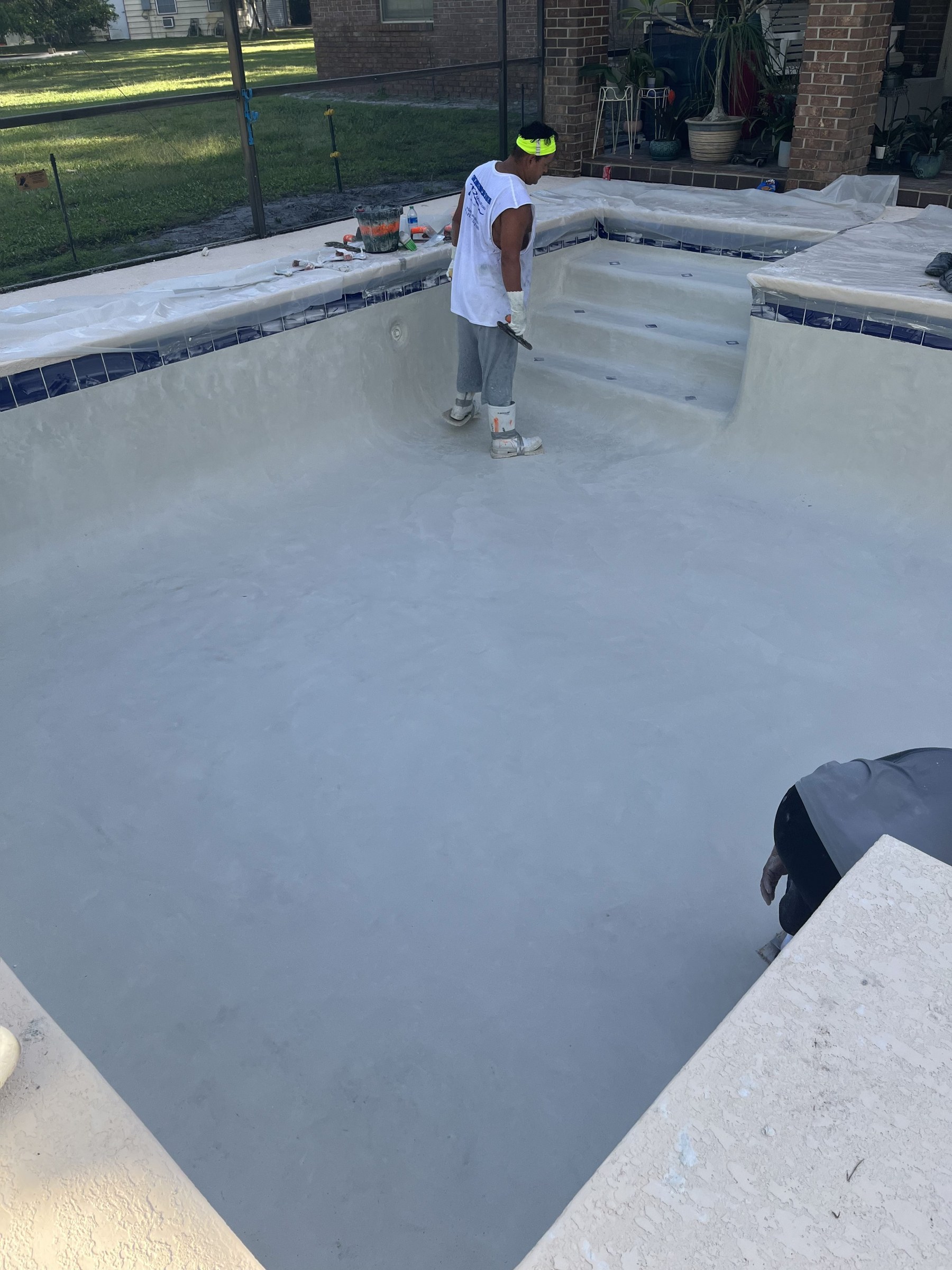
How to keep a resurfacing project within budget without cutting the wrong corners
There are responsible ways to control spending. The goal is to trim optional upgrades, not essential prep or installation quality.
A few strategies consistently help:
- Keep the existing tile and coping if they are structurally sound and visually acceptable.
- Choose a standard marcite or quartz finish rather than a premium pebble or polished aggregate system.
- Schedule resurfacing before damage spreads into larger repairs.
- Ask for clear separation between mandatory repairs and elective upgrades.
- Invest in proper water chemistry after startup to protect the new finish.
The third point deserves emphasis. Delayed resurfacing often costs more, not less. Once water penetrates failing areas, deterioration can accelerate. What starts as a finish problem can expose bond failure, crack movement, or fitting damage that raises the total project cost.
The importance of proper prep in pool replastering Orlando projects
Preparation is where experienced contractors distinguish themselves. A smooth sales pitch means very little if the substrate is not handled correctly. In pool replastering Orlando jobs, proper prep usually includes draining the pool safely, removing weak or hollow material, cleaning the shell thoroughly, addressing cracks appropriately, and ensuring the new finish can bond to a stable surface.
There is no single method for every pool. Some pools need localized chip-out. Others require more aggressive removal. Some surfaces can be prepared with mechanical methods and bonding agents. Others reveal conditions that demand additional repair before replastering proceeds.
Homeowners often focus on the finish color sample in the brochure. The crew focuses on what lies beneath it. That is exactly as it should be. A pool can look excellent on day one and fail early if the prep work was careless.
What to ask before hiring a resurfacing contractor
Orlando has no shortage of contractors advertising pool plastering Orlando services. Some are highly competent. Some are primarily sales pool resurfacing orlando organizations that subcontract most field work. Others handle everything in-house but vary widely in quality control. A homeowner does not need to become a plaster expert, but asking a few pointed questions can reveal a great deal.
Ask who performs the work, not just who sells it. Ask what prep is included. Ask how hollow areas and cracks are handled. Ask what startup process they require and whether they provide written care instructions. Ask what is excluded from the quoted price. If the pool has stains, roughness, or leak history, raise those issues directly and listen carefully to the response.
The strongest contractors are usually clear about uncertainties. They do not promise that every hidden issue can be diagnosed before the pool is drained. They explain what they expect to find, what allowances are included, and how change orders are handled if concealed conditions appear. That kind of candor is more valuable than a low quote wrapped in vague language.
Why startup and water chemistry determine how long the finish lasts
A new finish is vulnerable during the early curing period. This is where many resurfacing jobs get undermined. Even a well-installed marcite surface can suffer from poor startup chemistry, neglected brushing, or improper calcium and pH control during the first few weeks.
Fresh plaster releases compounds into the water as it cures. Water balance must be managed carefully to avoid scaling, etching, discoloration, or uneven curing. Brushing is not cosmetic busywork. It helps remove plaster dust and promotes a more even finish.
I have seen two pools resurfaced within weeks of each other, by crews of similar capability, age very differently because one owner followed startup instructions meticulously while the other handed the pool to a weekly service with no specific guidance. Within a season, one still looked crisp and the other had visible scale and mottling. The surface matters, but the first month matters almost as much.
When quartz or pebble becomes the better value
Budget-friendly does not always mean selecting the cheapest finish. Sometimes a modest step up pays off. A homeowner planning to stay in the property for many years may find that quartz or pebble delivers better long-term value, especially if the pool sees frequent use and the owner wants fewer concerns about wear.
A quartz pool finish Orlando residents choose often makes sense when they want a tougher surface without moving into the highest-end category. It can be a practical compromise. Likewise, a pebble tec pool finish Orlando homeowners select may feel expensive at bid time but justified over a longer ownership horizon if durability is the priority.
There is also the issue of expectations. If the pool is part of a carefully designed outdoor living area with new pavers, updated lighting, and a renovated lanai, a plain plaster finish may feel out of step with the rest of pool remodeling near me the investment. In that setting, spending more on the interior can be rational, not indulgent.
Matching the finish to the property
The smartest renovation choices usually reflect the home itself. An entry-level suburban pool does not always benefit from a luxury aggregate finish if the broader property will not support the added investment at resale. By contrast, a high-value home with a screened enclosure, custom decking, upgraded water features, and strong curb appeal may warrant more than basic marcite.
This is not merely a design issue. It is a valuation issue. Buyers notice pool condition. Appraisers may not assign a dollar-for-dollar return on premium finishes, but market perception still matters. A clean, smooth, freshly resurfaced pool can remove objections and improve confidence. Whether that finish needs to be marcite or something more depends on the home, the neighborhood, and the likely buyer.
A sensible path for Orlando homeowners
For many households, marcite pool resurfacing Orlando remains the most sensible entry point into pool renovation. It addresses visible wear, restores function, improves comfort, and refreshes the backyard without pushing the project into premium territory. That makes it especially attractive when the shell is fundamentally sound and the owner wants a straightforward, cost-conscious result.
Still, marcite is not the automatic answer for every pool. Some owners are better served by quartz. Others should consider pebble or polished aggregate because of longevity, aesthetics, or heavy use patterns. The right choice comes from honest evaluation, not from the assumption that cheapest always means smartest.
If you are comparing pool resurfacing near me results and collecting bids, focus less on the headline number and more on what the contractor is actually proposing. A resurfacing project succeeds when the shell is prepared properly, the finish matches the owner’s goals, and the startup is handled with discipline. Get those three pieces right, and even a budget-minded renovation can produce a pool that looks better, feels better, and serves the household well for years.
Classic Marcite is a swimming pool contractor in Orlando, FL, resurfacing and renovating residential and commercial pools since 1988: marcite plaster, quartz, Pebble Tec and polished aggregate finishes, pool remodeling, pool deck resurfacing, tile and coping replacement, and pool repair.
430 Fairvilla Road, Orlando, FL 32808 · Serving Orlando, Windermere, Dr. Phillips, Winter Park, Maitland, Lake Mary and Heathrow
Phone: (407) 521-6260
Website: classicmarcite.com
Find us on Google Maps